Bisham Manor
The King's CurseBisham Manor, in Berkshire, is Margaret Pole’s restored family home and the center of her independent estate. Its great house, farmland, and neighboring priory promise security, but that security is never absolute: royal favor can restore a family’s wealth, royal authority can threaten it, and illness can cross the high walls. The manor becomes both a practical household to be managed and a measure of how much protection land and lineage can—and cannot—provide.
The estate and its restoration
After the family’s name and fortune are restored, Margaret can live at Bisham and direct her attention to its buildings, lands, farms, and income. By the summer of 1517, the manor gives her a respite from court, where she is no longer required to care for Princess Mary during Henry VIII’s flight from illness. She uses the interval to attend to her own property and to plan the marriage of her son Montague, seeking a match that will augment the family’s fortune or standing. Her household’s domestic history is embedded in that ambition: Montague and Jane had grown up in the same aristocratic household, seeing one another at meals, church, festivities, dances, music, and hunts.
Bisham is not simply a seat of inherited status but a working estate. Margaret takes pride in a home newly built up around the family crest, prosperous fields, cattle, and the labor that sustains them. When the king’s officer arrives in 1518, his inspection of the retiled roofs, renovated towers, meadows, haystacks, wheat, barley, and livestock makes the manor’s wealth visible as a landscape. That abundance is at once the basis of Margaret’s security and something the Crown can assess and command.
The contrast with her earlier poverty sharpens the meaning of Bisham’s prosperity. After her husband’s death, the royal wardship of her young sons places estate earnings under the king’s control, while Margaret’s widow’s share is limited to a third of rents and profits. She describes surviving on too little income, reducing her household, and managing hunger by scraping pots and making use of whatever food remains. At Bisham, she later stands by the granary as harvest loads arrive, seeing the stores as food for her people through winter and profit for the estate. The home’s security is therefore material and laborious, not merely ceremonial.
Family life and political hospitality
In 1517, Bisham offers Margaret room to think about the family’s next generation. Montague is, in her view, an exceptionally eligible bachelor, and his marriage is part of her effort to strengthen the restored family position. The later royal visit turns the manor’s resources into a display of hospitality—and an exercise in managing royal power. When Henry VIII’s Knight Harbinger announces that the king will stay for eight nights, Margaret immediately alerts Montague, Arthur, Ursula, Geoffrey, and the other members of the household. The preparations are exacting: Montague helps mark the road for the approaching court; Arthur arranges musicians and hunting horses; tenants are told to expect the king’s progress across their land, to accept compensation for damage later, and not to bring complaints during the visit. Margaret’s steward purchases delicacies, while Montague’s man is sent to London for wine.
This welcome is not evidence of an equal relationship between host and monarch. The harbinger requires a list of rooms and insists on inspecting servants and stable lads for illness. Margaret’s household complies, even as her steward bristles at the intrusion. The manor’s fine condition, which Margaret has worked to create, must be made available to royal scrutiny and service. Its abundant provisions and carefully rehearsed welcome show both her competence as a landholder and the obligations attached to favor.
Family hospitality also gives Bisham a life beyond the court. At Easter 1518, when Henry VIII’s court remains closed to most of the nobility and travels near Oxford, Margaret’s Neville and Stafford kinsmen stay for a week. Among them is Edward Stafford, Duke of Buckingham, with his son Henry. The younger visitors ride, hawk, and fish in the Thames; they bring a salmon back and insist on cooking it themselves. Margaret’s household turns their catch into a theatrical triumph, carrying the dish shoulder-high into the great hall as three hundred diners rise to applaud. The scene presents the manor as a large, sociable household, where kinship and shared amusement briefly displace the anxieties of court.
Retreat, surveillance, and silence
Bisham’s distance from court becomes especially important when royal favor gives way to danger. After Henry VIII executes Edward Stafford, Duke of Buckingham, for treason, Margaret retreats to her manor. In 1521, she still believes the king may recover his former warmth and that he will eventually summon her back to serve Princess Mary. In 1522 she lives quietly and almost invisibly, sees only her sons, and exchanges cautious family news with George Neville. Even ordinary correspondence is shaped by fear: Neville’s letters are left unsealed in case a spy intercepts them.
The family’s restraint extends into the house itself. Arthur lives nearby at Broadhurst, Montague is only four miles away at Bockmer, and Geoffrey remains at Bisham with Margaret. Yet even when they are alone after the servants have left, mother and son do not speak about Henry VIII, the court, or the princess Margaret is no longer allowed to serve. They make no explicit agreement to remain silent; their everyday conversation simply excludes the subjects that might endanger them. Bisham is a family refuge, but its privacy has been remade by the expectation of surveillance. Its rooms shelter the family physically while the political climate determines what may be said within them.
Illness, care, and bereavement
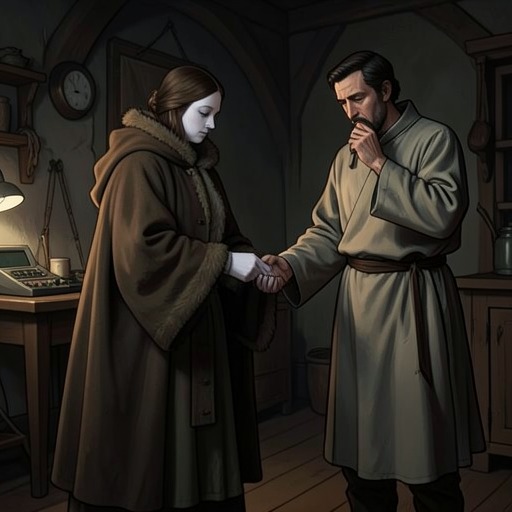
During the sweating sickness of 1528, Bisham becomes a place of refuge for relatives fleeing infection. Arthur sends his children Henry and Margaret, known as Maggie, with their wet nurse, because the illness has reached Broadhurst and he and his wife Jane are sick. Geoffrey and his wife Constance also come to live with Margaret. She receives the children at the great hall and comforts them despite her own fear. The manor’s separation from the town is reinforced by precautions: food brought from outside is washed with vinegar and water, the household relies on its own land, strangers are kept away, and travelers from London are directed to the priory guesthouse rather than the house. Margaret prepares a daily tincture of rosemary, sage, and sweet wine for the household, while prayer takes place in her private chapel instead of the priory church.
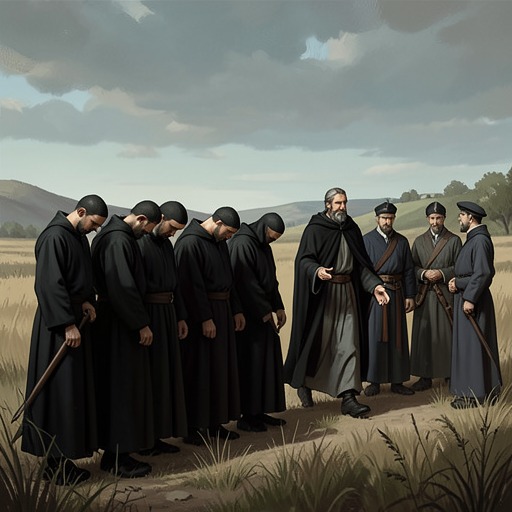
These precautions cannot keep the disease from the family. Arthur dies, and the news reaches Margaret through Geoffrey in the chapel. Arthur’s wife, Jane, is near death herself, and the household steward has abandoned his post and barricaded himself in his rooms. With the house in disorder, Montague orders that Arthur’s body be taken to the priory at Bisham and laid in its chapel. Margaret and Geoffrey join the prayers for his soul after the church has been cleaned and prepared. The family home and priory together provide a place for burial among the Plantagenet kings, but the ceremony cannot undo the loss: Margaret reflects that the wealth and power regained at Bisham could not save her son.
The family’s grief returns in 1533, when Arthur’s young son Henry dies after drinking from a village well while out hunting. Margaret travels to Bisham to bury him in the family vault and blames herself for failing to protect him. Jane, now withdrawn into the priory, clings to the vault’s iron grille and mourns her husband and son. The manor’s associated sacred spaces—the priory chapel and family vault—gather the consequences of successive deaths close to the household that had sought to shelter its children.
Work, memory, and the manor’s limits
Even amid political crisis, Bisham remains a place of estate work. Margaret’s records room contains a large round rent table with lettered drawers for tenants’ deeds; it can be turned from A to Z so she can retrieve a document quickly. The detail presents household administration as a practiced source of satisfaction and control, distinct from the uncertainty of royal politics. At harvest, she watches the reapers cut the wheat, women bind the sheaves, children chase hares with terriers, and older people glean fallen grain. The scene connects the prosperity she values to the labor of the whole community and to the expectation that nothing should be wasted.
That harvest abundance stands against the losses and political change that surround the manor. In 1534, Margaret returns there after the oath demanded by the Crown has divided her from people who cannot sign it; her chaplain and confessor John Helyar tells her he cannot take the oath, while Margaret says that she and her sons have already done so. In 1536, she again stays at Bisham while the court is on progress, watching the wheat turn gold and the harvest gangs at work. The manor remains her home when access to court narrows, and its cultivated fields offer a visible continuity that court politics does not.
By 1537, Margaret leaves London for Bisham as soon as the roads are dry enough to travel. The movement back to the estate recalls its recurring function: a place to withdraw from the capital’s dangers, maintain family and household, and remain close to the land that sustains them. Yet Bisham is never an invulnerable refuge. Royal power reaches its tenants and kin, disease reaches its halls, and the family vault fills with those the estate could not save. Its significance lies in that tension: the manor can preserve wealth, work, and belonging, but cannot guarantee safety from the forces shaping the family’s fate.